
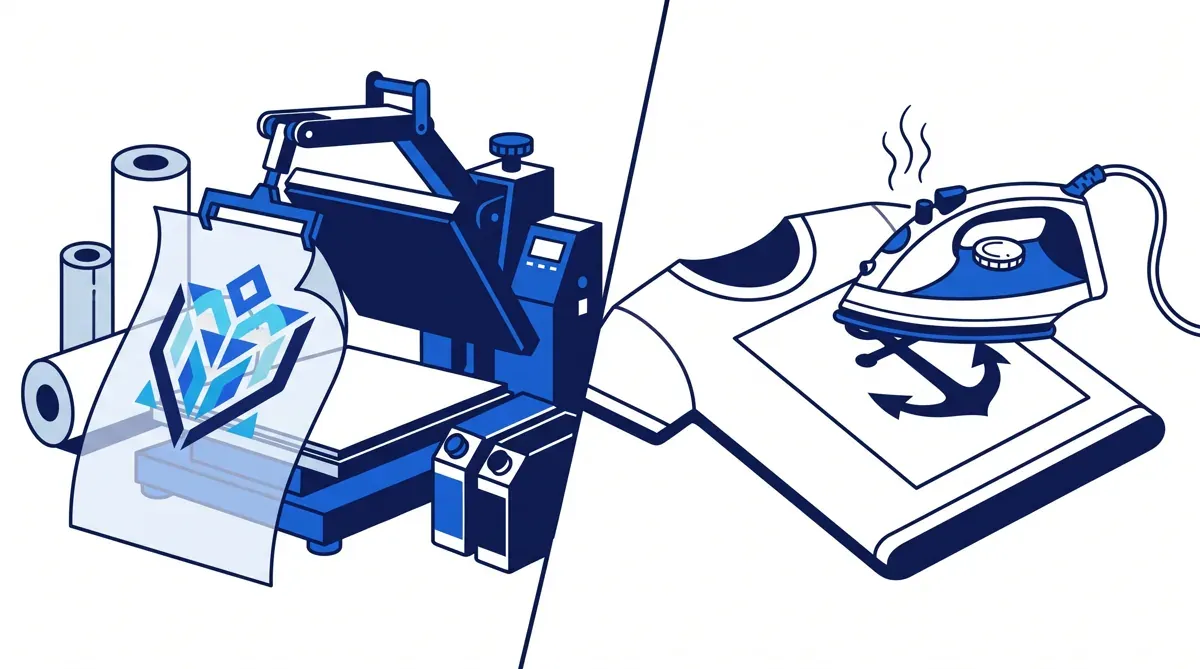
Both press onto fabric with heat, but DTF transfers and printable iron-on transfers (the kind you run through a home printer or buy at a craft store) are worlds apart in quality and durability.
The quick answer
- Choose DTF for vivid, durable, professional results that survive lots of washing.
- Iron-on transfers are fine for quick, one-off, low-wash craft projects.
Side-by-side comparison
| DTF Transfers | Iron-On Transfers | |
|---|---|---|
| Made for | Professional decoration | Home/craft use |
| Color & detail | Full color, sharp, opaque | Can look faded or translucent |
| Durability | Many washes, stays flexible | Cracks/peels quickly |
| Dark garments | Yes (white underbase) | Often poor without special paper |
| Feel | Thin, flexible film | Can feel heavy/plasticky |
| Application | Heat press for best results | Household iron |
Why DTF lasts longer
DTF is printed with a proper white underbase and adhesive powder, then cured — so it bonds into the fabric and stays vivid and flexible. Most printable iron-ons sit on top as a thin coating that fades, cracks, and peels after a few washes, especially on dark shirts.
When iron-ons make sense
For a single keepsake shirt you won’t wash much, an iron-on is cheap and quick. For anything you’ll sell, wear often, or wash repeatedly, DTF is the clear winner.
No heat press? See can you use DTF without a heat press.
Ready for professional-quality transfers? Start your order or compare DTF vs HTV and DTF vs screen printing.