
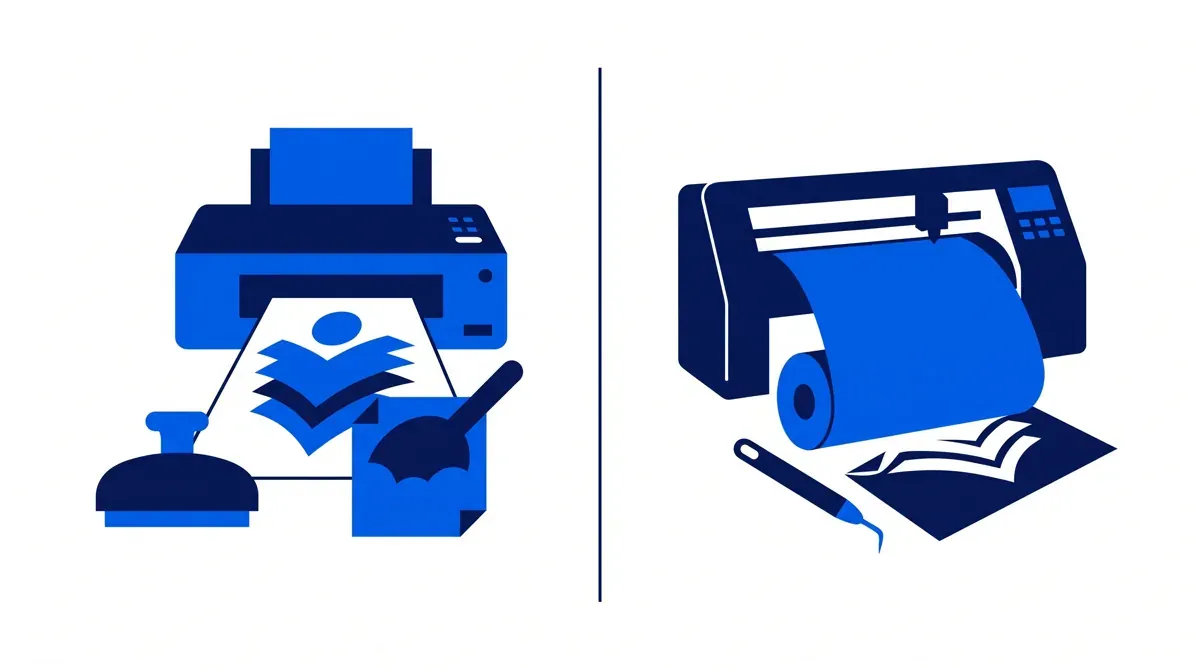
Heat transfer vinyl (HTV) is a popular starting point for custom apparel, but it hits a wall with complex, multi-color art. DTF transfers remove that wall. Here’s the comparison.
The quick answer
- Choose DTF for full-color designs, photos, gradients, or anything with lots of detail.
- Choose HTV for simple one- or two-color text and logos, or one-off names and numbers.
Side-by-side comparison
| DTF Transfers | HTV (Heat Transfer Vinyl) | |
|---|---|---|
| Colors | Unlimited, full color | One color per layer |
| Photos & gradients | Yes | No |
| Weeding required | No | Yes (tedious for detail) |
| Fine detail / small text | Excellent | Limited |
| Layering | Single press | Multiple layers/passes |
| Fabric compatibility | Cotton, poly, blends, more | Many fabrics |
| Best for | Detailed, multi-color art | Simple text & shapes |
The weeding problem
With HTV, every color is a separate sheet you cut and then weed — peeling away the vinyl you don’t want by hand. For a name and number it’s quick; for a detailed, multi-color logo it’s slow and error-prone, and gradients simply aren’t possible.
Why DTF is easier for complex art
A DTF transfer is printed in full color in a single pass — no weeding, no layering, no color limits. You get photographic detail and smooth gradients, then press it on in one step. For anything beyond simple text, DTF saves enormous time.
Bottom line
HTV still has a place for quick, simple, single-color jobs. But for full-color, detailed, or photographic designs, DTF is faster and looks far better. Start your order or see transfer sizes & pricing. New to DTF? Read what is a DTF transfer.