
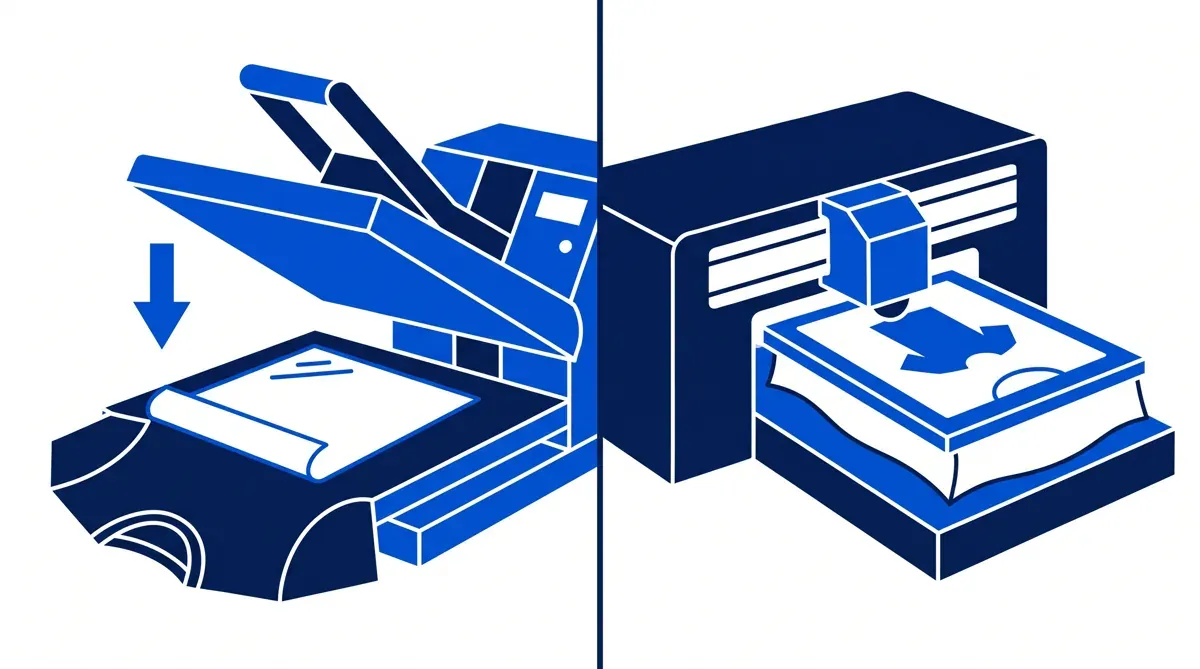
DTF and DTG are both digital, full-color methods — the difference is where the ink goes. DTG prints straight onto the garment; DTF prints onto a film you press on later. That one difference drives everything else.
The quick answer
- Choose DTF for fabric flexibility, stocking transfers to apply on demand, and pressing onto items you can’t run through a printer.
- Choose DTG for soft, photo-real prints on cotton garments when you’re printing the finished item directly.
Side-by-side comparison
| DTF Transfers | DTG (Direct-to-Garment) | |
|---|---|---|
| Where ink goes | Onto film, then pressed on | Directly onto the garment |
| Best fabric | Cotton, poly, blends, more | Cotton (and high-cotton blends) |
| Dark garments | Yes | Yes (needs white underbase) |
| Press hats, bags, hard-to-print items | Yes | No |
| Pre-treatment | Not needed by you | Garment pre-treatment required |
| Store & apply later | Yes — transfers keep | No — printed on demand |
| Feel / hand | Light film | Very soft, into fabric |
The workflow difference
With DTG, the garment goes into the printer, so you’re committed to that specific item and need pretreatment for good results. With DTF, you receive ready-to-press transfers you can stock and apply whenever you want — onto shirts, hoodies, hats, bags, and more. That makes DTF great for fulfilling mixed orders or decorating items a DTG printer can’t handle.
Durability and feel
DTG has the softest hand because the ink sits in the fabric, and it shines on cotton. DTF sits on top as a thin, flexible film that bonds to far more fabrics and holds up well to washing when applied and cared for correctly.
Bottom line
DTG is excellent for soft, direct prints on cotton. DTF wins on fabric range, flexibility, and the ability to stock transfers for later. Start your order or browse transfer sizes & pricing.