
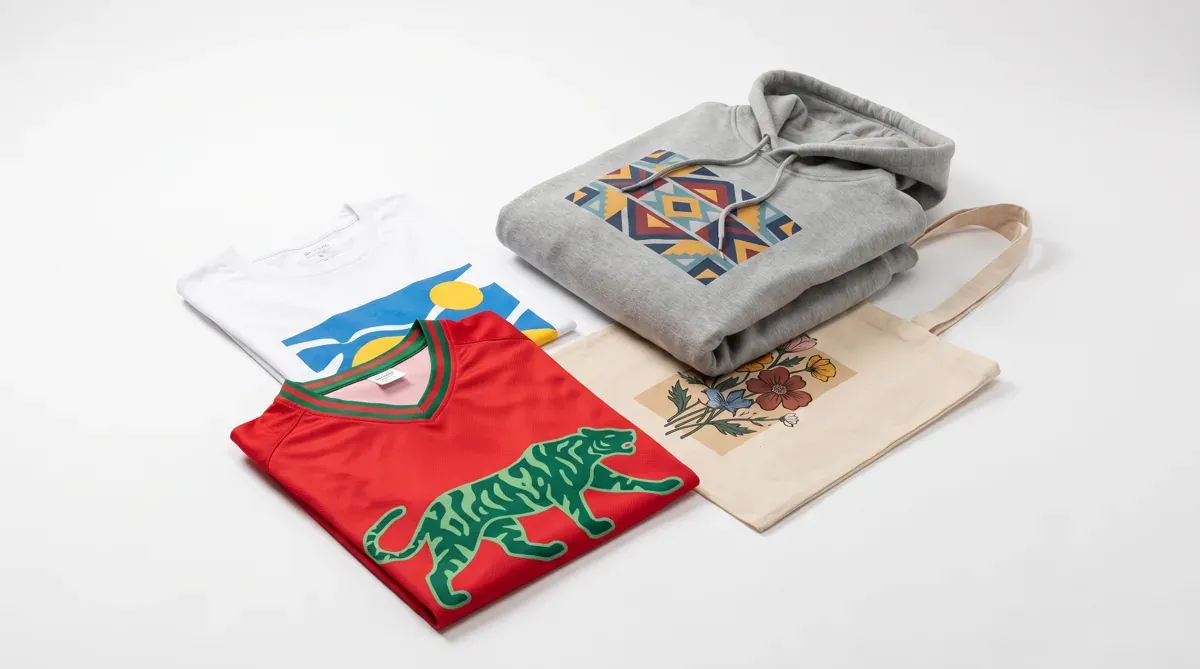
One of DTF’s biggest advantages is fabric flexibility — it bonds to far more materials than sublimation or many other methods. Here’s how it performs across common fabrics.
Fabric compatibility at a glance
| Fabric | Works with DTF? | Notes |
|---|---|---|
| 100% cotton | Excellent | The classic; durable and forgiving |
| Polyester | Excellent | Use lower temp to avoid scorching/dye migration |
| Cotton/poly blends | Excellent | Great all-rounder |
| Tri-blends | Very good | Soft hand, press with care |
| Fleece / hoodies | Very good | Firm pressure on thicker fabric |
| Performance / spandex | Good | Low temp, quick press |
| Nylon | Good | Low–medium heat; always test first |
| Canvas / tote bags | Excellent | Firm pressure for thick material |
Why DTF is so versatile
DTF prints onto a film with a white underbase, so it shows up vividly on any color garment — light or dark — and bonds to both natural and synthetic fibers. That’s why it works where sublimation (polyester only) and vinyl can fall short. Compare in our DTF vs sublimation guide.
Pressing tips by fabric
- Polyester & performance: lower the temperature to prevent scorching and dye migration.
- Thick fabrics (fleece, canvas): use firmer pressure and a full press time.
- Always pre-press to remove moisture, and finish with a second press.
Full numbers are in our heat press settings by fabric guide. Ready to print on your fabric of choice? Start your order.